

A Dragonfly Without Borders
How a restless insect wanders our flawed and beautiful planet

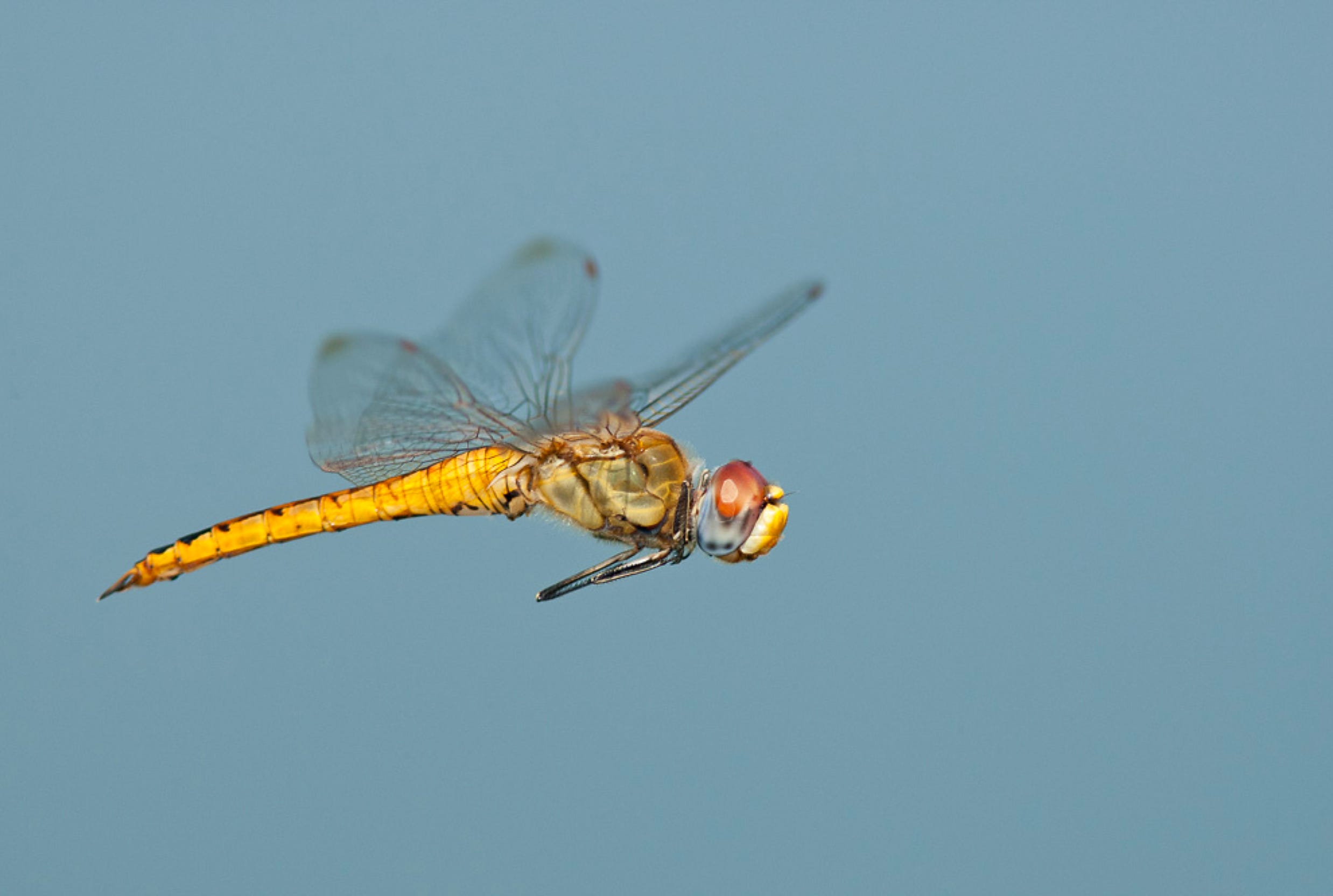
As we go about the ordinary business of living, a golden insect hunts over the garden, mates beside a roadside ditch, and patrols the supermarket parking lot. Its name rings like that of a god: Pantala, a dragonfly that defies the borders we draw across the living world.
Never mind that Pantala flies around, kills other insects, and has indiscriminate sex. Plenty of dragonflies do that. But Pantala migrates vast distances, even across oceans, and inhabits every continent except Antarctica. Few other animals get around the planet on their own like this.
If it’s not already flying in your neighborhood, Pantala may be soon. (In a note below, I offer tips on finding it.) And even though it hasn’t yet arrived this summer to my small city, I’m content knowing that Pantala is out there in the world. Because here is a species that humans cannot easily drive into decline or extinction. No border wall will block Pantala. No bombs can wipe it out. Not even humanity’s routine assaults on the natural world will destroy this insect.
After all, dragonflies have been around for about 300 million years, a thousand times longer than us. They’ve been places, seen things, and survived mass extinctions and various cataclysms. And when humans are gone from the planet for good, Pantala or its relatives will likely be flying around and thinking something like, “Well, those apes were weird. Wonder what that was all about.” (Or so I like to imagine.)
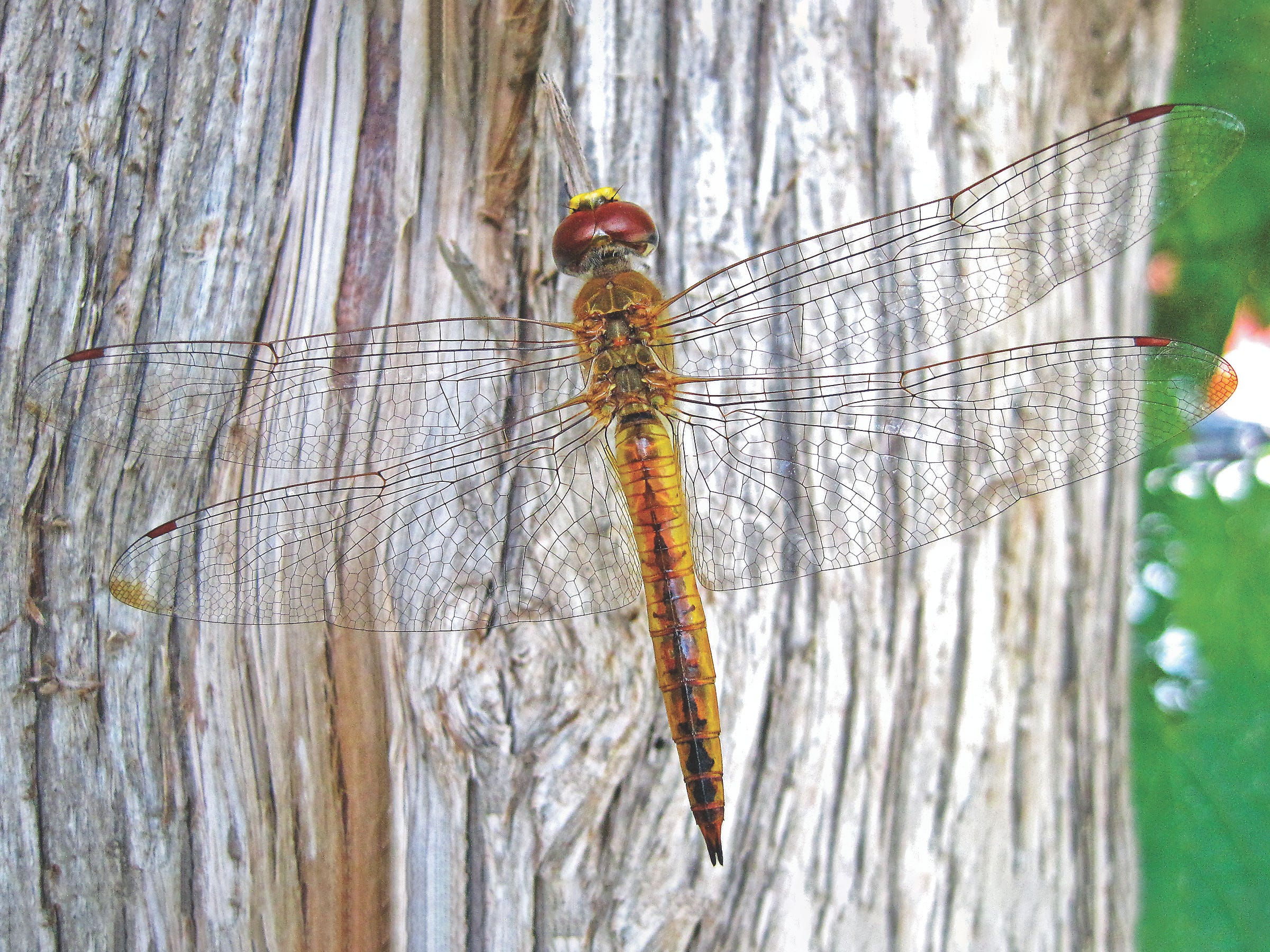
This insect’s actual common name is Wandering Glider (or Wandering Globetrotter). Its scientific name, Pantala flavescens, basically means, with license on my part, gold on vast wings (or in some derivations the golden explorer). I like to use its genus name as its common name because Pantala is one of the loveliest words I know.
Insects invented flight about 400 million years ago, dragonflies mastered it, and Pantala has taken the idea great distances. Its wide hind wings, wider than those on other dragonflies, make for efficient aerodynamics — more glide, less flap on the winds of the world.
And Pantala rides those winds like few other insects. Most notable in its globetrotting is an autumn migration from India to Africa across the northern Indian Ocean. The flight coincides with prevailing winds (tailwinds for a dragonfly) and monsoon rains, both of which play an outsized role in Pantala’s success on Earth.
Dragonflies lay their eggs in wet places — waterbodies, rivers, or wetlands. And it generally takes a year or more for a dragonfly to go from egg to aquatic nymph to free-flying adult. Pantala does it in only four to six weeks. This rapid development allows Pantala to lay its eggs in the usual places, but also in roadside puddles, rain pools, or other waters that dry up too soon for mere mortal dragonflies to use. And then it can move onward — or its offspring can soon emerge to continue another leg of a long-distance migration.
The vast majority of dragonflies never venture far from their natal waters. Pantala is a roamer, a drifter, an adventurer. When I see it on the wing in my community of Montpelier, I know that someone else might be noticing this same species in Mogadishu or Mumbai or Melbourne.
Pantala flies just the same among the luxury resorts of the Maldives and the refugee camps of Bangladesh, over oil rigs and solar arrays, over small towns of the U.S. and bombed-out buildings of Iran.
To me, Pantala is a messenger, a reminder to think beyond my own borders. Whenever I see it on the wing, this golden insect brings me kinship with a world beautiful and bleak, promising and imperfect, immeasurably vast and yet small and wondrous enough for a two-inch dragonfly to cross an ocean.
Find Your Pantala (and the Dragonfly That Mistook a Car for a Puddle)
Pantala is now on the wing from Los Angeles to Chicago to Baltimore (and even playing just outside of Peoria). It’s flying in Italy, Russia, Tel Aviv, India, Thailand, South Korea, Japan, and lots of places in between. Expect to see more of them soon farther north.
Here in Vermont, for example, Pantala usually appears by early August, probably riding tropical systems that bring heat and humidity (and these dragonflies) into northern tier states and southern Canada. (By the way, they migrate south in fall like hawks.)
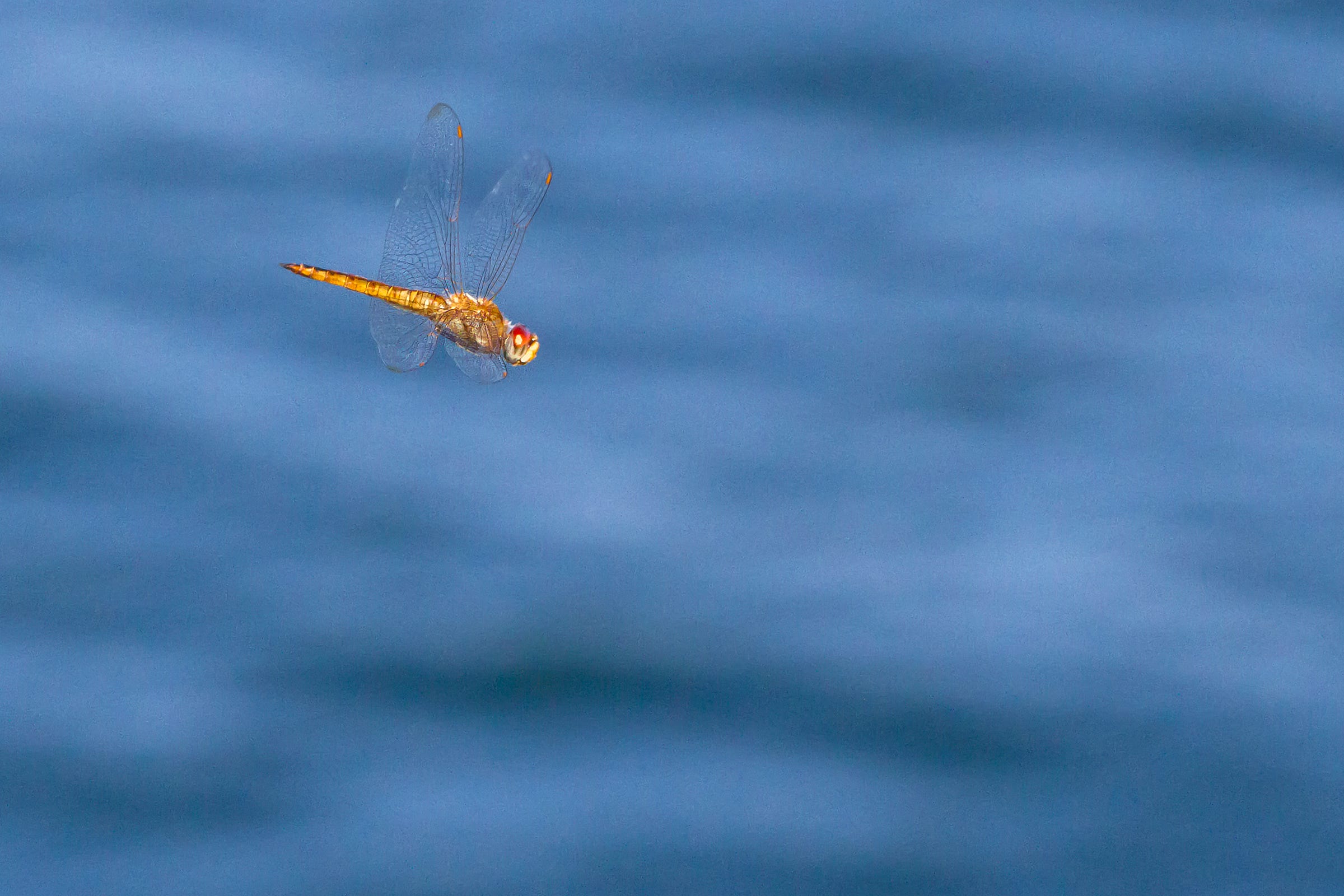
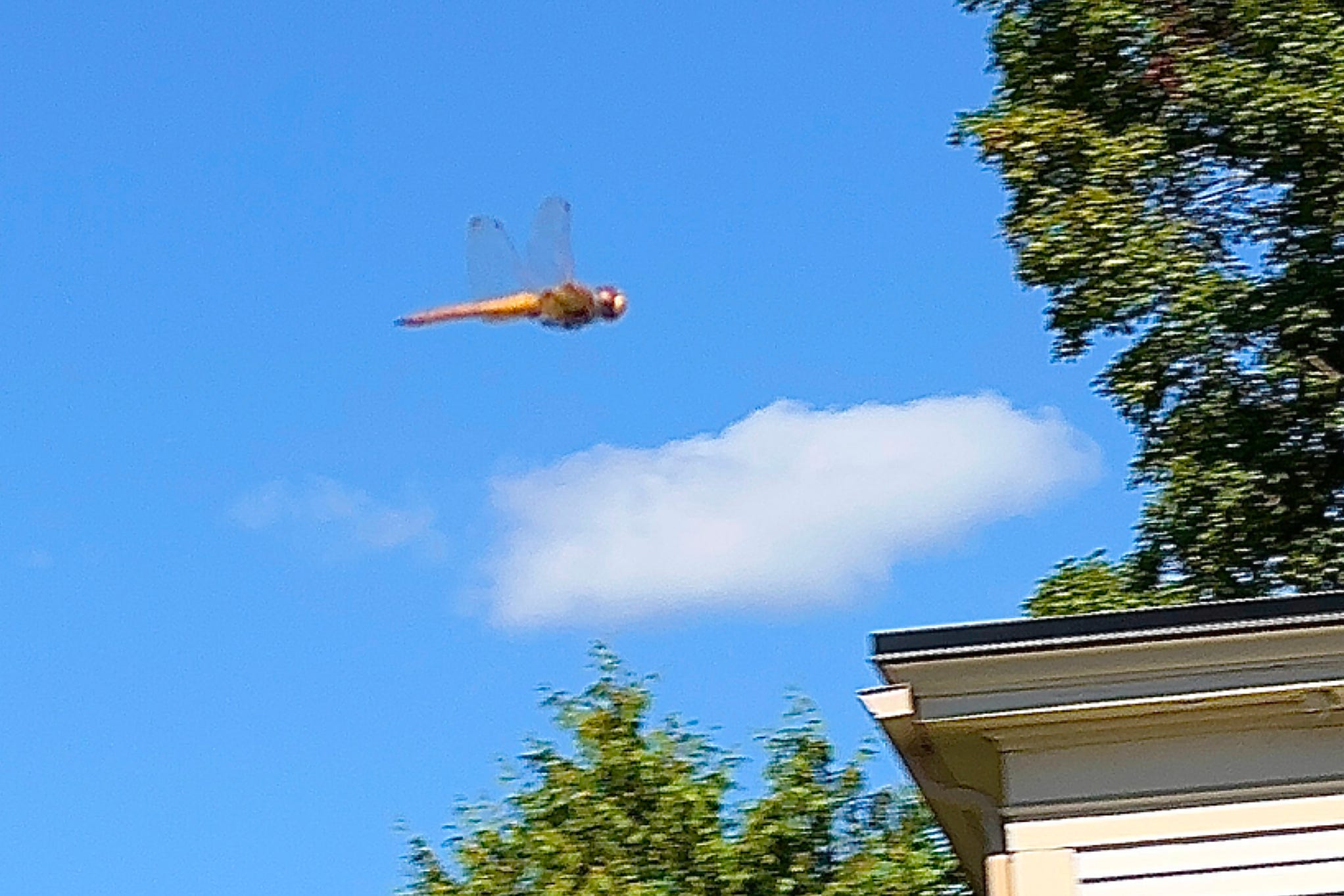
You will almost certainly see your first Pantala airborne rather than perched. And those of us who know dragonflies can identify this one simply by the way it carries itself in flight. Look for a golden dragonfly gently tapering in profile and flying a variable but watchable beat along a street or in some natural opening.
A Pantala will also hover over parking lots or in traffic because light reflecting off vehicles can make a Ford, Toyota, or Subaru look like a little pond. I’ve seen females lay eggs on car hoods (very sad).
If you’re seeing golden dragonflies making short sorties and landing often, especially in fields near water, those are probably meadowhawks (in the genus Sympetrum) or other species — and almost certainly not Pantala.
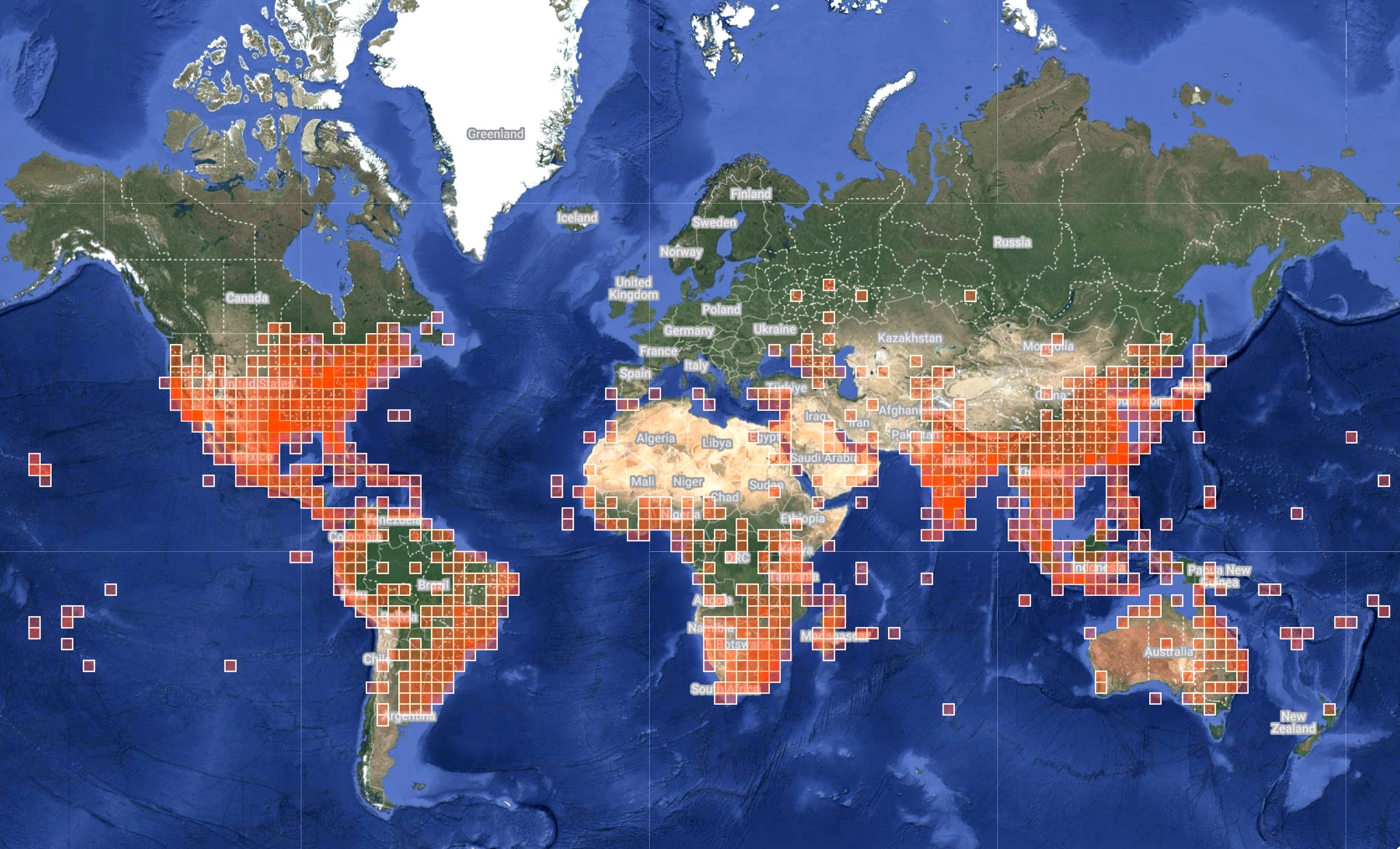
Here is a live iNaturalist map of Pantala sightings around the world since July 1, 2026. (Zoom and click its orange pins.) The map will keep you up to date on where they’re being sighted this summer, which could be most anywhere in a tropical band around the planet and into temperate areas. The map below (not clickable) simply shows more than 30,000 accumulated Pantala sightings worldwide over the past 30 years (note the sightings at sea).
Finally, there is another Pantala in the world — the only other species in the genus — called Spot-winged Glider (Pantala hymenaea). Also a migrant, it’s a dragonfly entirely of the Americas. You’ll often see this species in flight as well, sometimes with its sibling. Look for the spot on each hindwing (visible in flight).
Postscript: Greg Lasley (1941-2021)
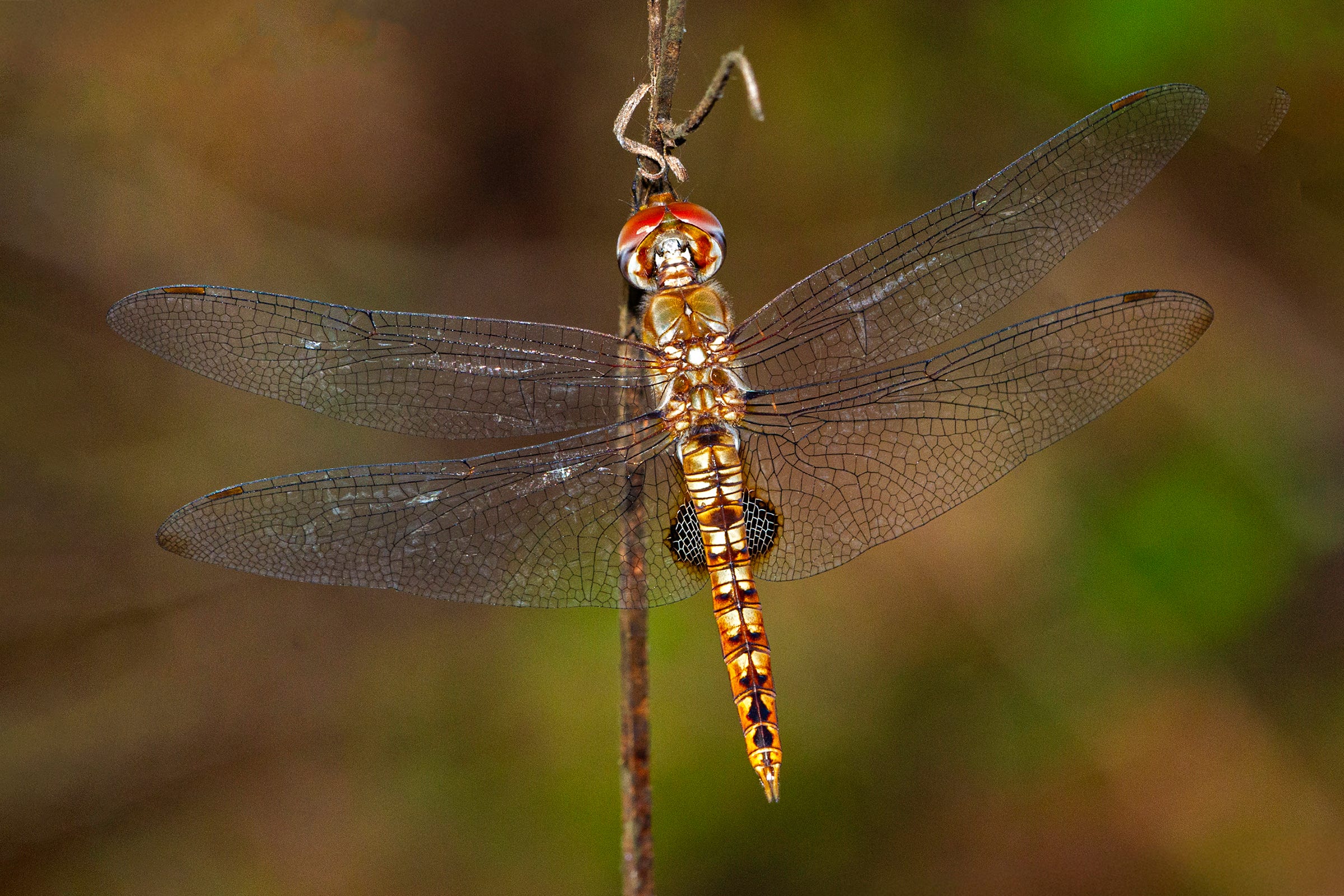
The late Greg Lasley left us with spectacular photography from nature, not the least of which includes his two dozen Pantala images. Before he died, Greg gave me permission to use his images, including the shot atop this essay. Here’s my elegy to Greg. We miss him a lot.

Thanks for using Greg Lasley's photos. I suppose this is a form of immortality when the photos he took pop up on INaturalist and remind the reader/viewer of Greg's generosity in sharing his knowledge and enthusiasm.
“‘Well, those apes were weird. Wonder what that was all about.’” 🤣