
The Stink of Springtime
Deception, war, and my quest for the first flower of the year

PICK your favorite sign of spring: birdsong, baseball, amphibian sex, seed catalogues. Mine is the first plant in flower, which turns out to be an American hoax.
Your own inaugural bloom depends of course on where you live and where you search. Here in Vermont, I had three reliable contenders for first in flower of 2026, each somewhat an iconoclast:
Silver Maple (Acer saccharinum) — This is likely first for many of us in the northern U.S. Although attractive in their own ways, Silver Maple flowers have no petals — they simply flaunt their reproductive parts (pistils and stamens) like fireworks in the vernal winds. They’re also sexually fluid (see postscript for paying subscribers).
Eastern Dwarf-Mistletoe (Arceuthobium pusillum) — Full disclosure: I was rooting for it. Hard to find, this rare plant is a parasite on twigs and branches of certain conifers, mostly Black Spruce (Picea mariana) in Vermont. And if its peculiar flowers aren’t enough, dwarf-mistletoe will go on to disperse its sticky seeds by firing them like cannonballs at spruce boughs.
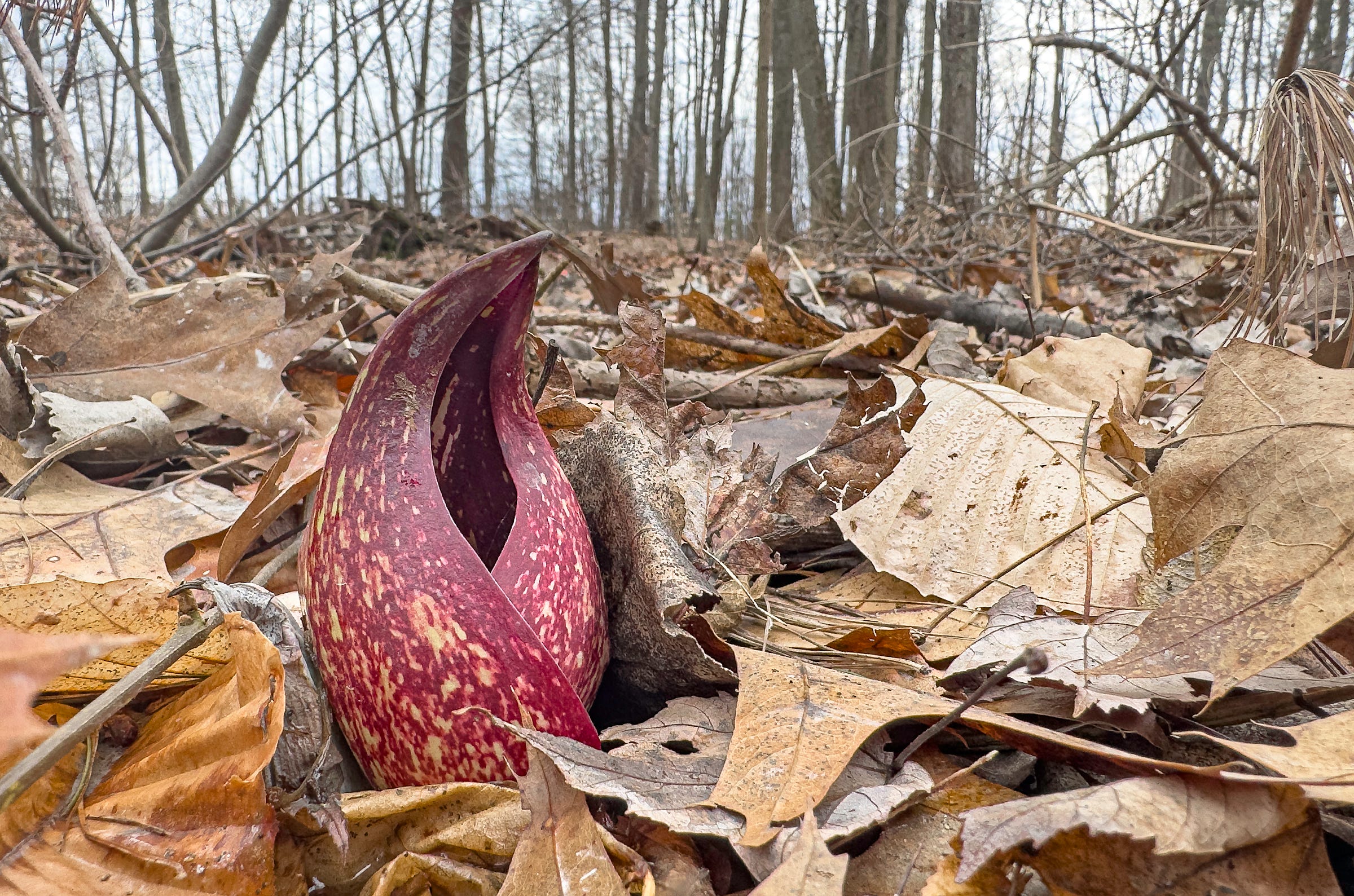
Eastern Skunk Cabbage (Symplocarpus foetidus) — As it turned out, this was my first plant in bloom in 2026, and is probably first across much of its range in the eastern U.S. and adjacent Canada. Mine was flowering on March 12 in wet woods beside Vermont’s frozen-over Lake Champlain (the banner above). Which makes it odd and amusing that the first native flower of the year for many of us is fetid and deceitful.
Night (and Day) of the Living Dead
Determined, ruthless, and stinky, my triumphant skunk cabbage probably beat the competition to blooming by a week or so. And this is no ordinary flower.
The first thing a skunk cabbage plant shows the world emerges from wet earth like a zombie rising from the grave. It resembles fresh or rotting meat — and it stinks. The ruse features two major parts: a maroon-colored sheath called a spathe, which shrouds a pale knob called a spadix. By any name, the odor (and perhaps its appearance) lures flies, beetles, and other insects normally attracted to carrion. I could smell it from a couple feet away.
The spadix bears a mosaic of tiny flowers — in a sense, a bouquet. Lacking petals as we know them, each little flower on a spadix has a single pistil surrounded by four stamens. That’s it — that’s your first flower of spring awaiting its flies. A letdown? Hardly. There’s more.
During the cold, early stage of its life above ground, the spadix generates heat — something called thermogenesis. Not only can it help the spathe rise through frozen soil, ice, and snow, it enhances vaporization and wafting of the plant’s odor toward pollinators. It also turns the skunk cabbage at this stage into an insect warming hut, probably increasing pollination efficiency and keeping the reproductive parts from freezing. During my visit, the outside temperature was 34°F — inside a spathe: 50°F. As spring progresses, skunk cabbage goes on to develop bumpy fruits in its spadix and grow big leaves (which will never end up as soup or sauerkraut or kimchi).


Lies and Hope
For my first flower of 2026, I could have waited a week or two for the crocuses and snowdrops (neither native to North America) to sprout on the lawn, or for the Silver Maples to erupt in ruby fireworks (below). Instead, I sought out a skunk cabbage and made it an exalted sign of spring.
At the end of a severe winter here in Vermont, with war darkening the springtime, maybe I needed a plant determined enough to rise through snow and ice, even if it goes on to perpetrate a hoax on insects, who receive no nectar (bees do take its pollen).
After all, deception is a way of life on Earth. Opossums feign death to trick predators. Caterpillars can resemble anything from snakes to twigs to bird shit. A plant can stink like carrion to attract pollinators. We humans lie for various selfish reasons: survival, lust, greed, cruelty, power. And now we’re reminded that truth is the first casualty of war.
I’ll take the mendacity of plants. Even if they deceive now and then, plants tell us like no other organisms where we are in the world. Name me the trees in a forest; I’ll tell you what birds likely nest there. Name the plants in a wetland; I’ll predict its butterflies. As someone who has watched birds for half a century, not until I turned my attention to plants did I truly develop a sense of where I am on the long, green path.
Sure, I go off course in nature and too often feel lost in the maelstrom of human culture. It can happen to any of us. But last week, in a time of war, I found my bearings beside a lowly skunk cabbage. Generating heat, beckoning insects, perpetrating a hoax, my first flower of the year was an odd and odorous display of resiliance rising toward the new light of spring.



Postscripts
Gratitude goes to Lorna Dielentheis, an artist and field naturalist partial to Eastern Skunk Cabbage who writes here on Substack; to Steven Daniel for his image of Eastern Dwarf-Mistletoe’s odd, three-lobed male flowers; to Cody Limber for the IR image; and to Jerry Jenkins for his photograph of skunk cabbage burning through the snowpack (and pointing out that some of the melt around the plant was due to solar heating).
For Paying Subscribers: My post on the fluidity of maples: “Red Alert: Springtime and sexual identity expressed in maple flowers.”
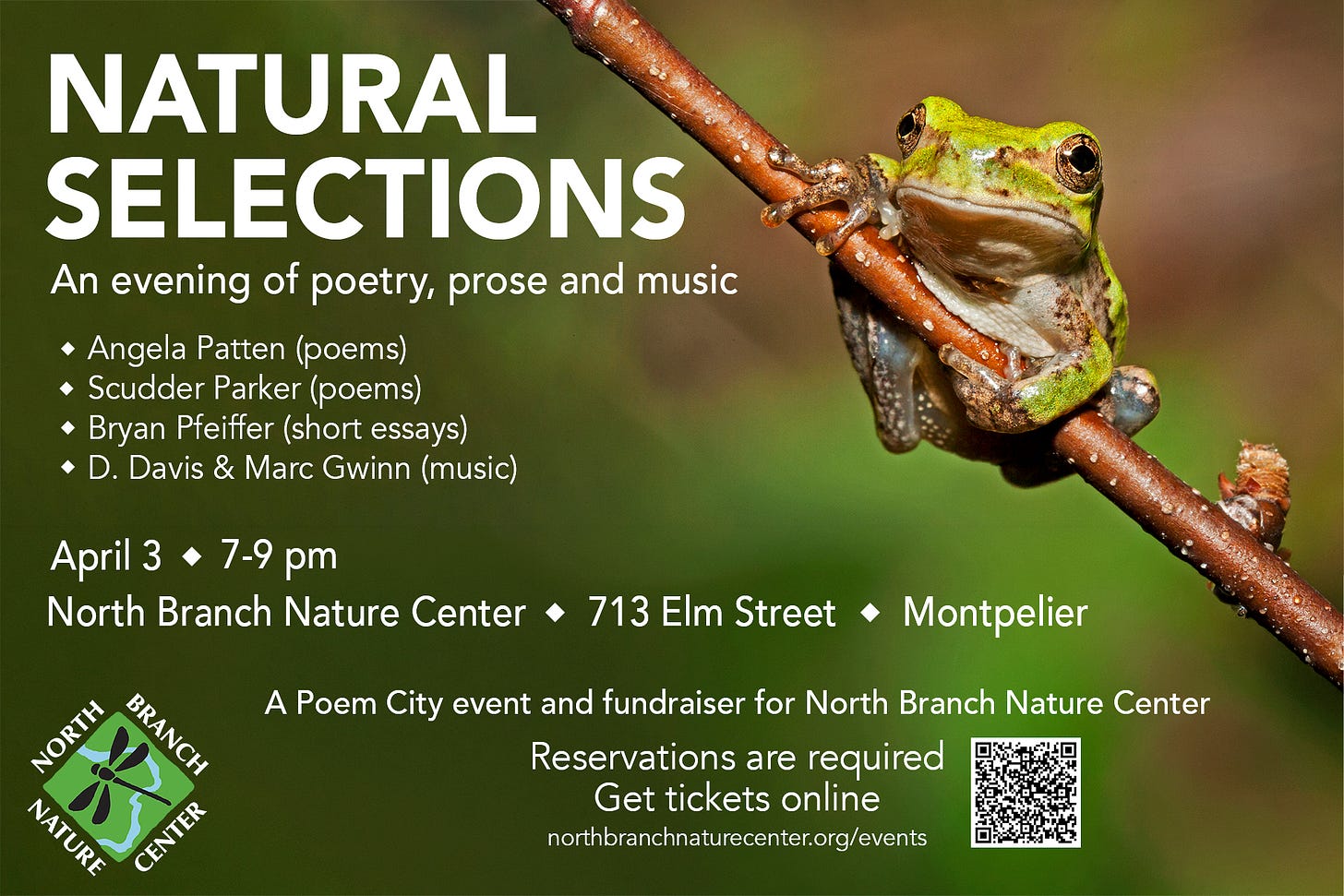
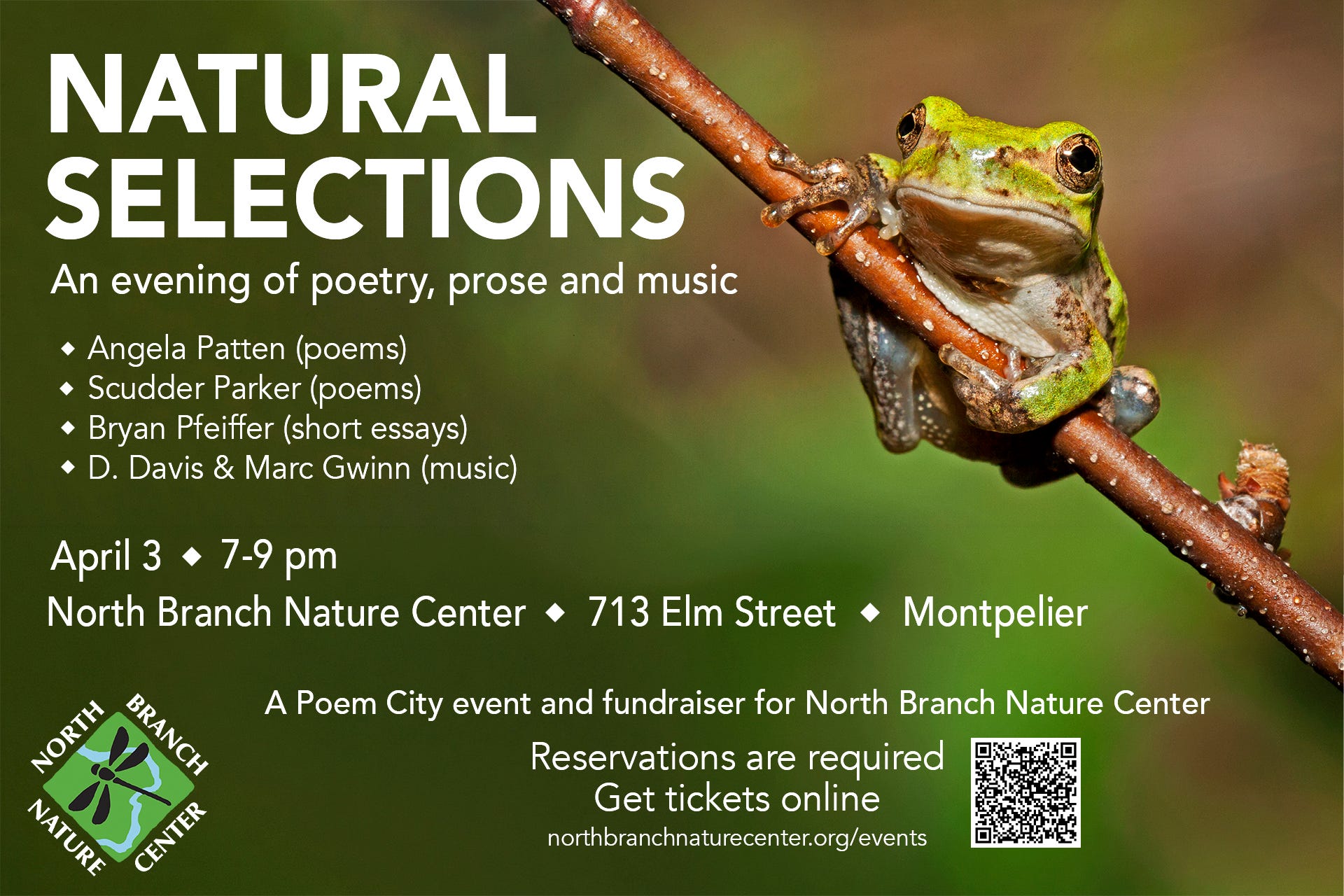
Finally, if you’ll be in or around Montpelier, Vermont, on April 3, meet me and friends for Natural Selections, an evening of poetry, prose, and music at North Branch Nature Center (NBNC). I’ll be reading a new essay and a poem or two. Part of Montpelier’s annual Poem City celebration, the event is a fundraiser for NBNC (my favorite nature preserve).
Thank you for this wonderful post about Skunk Cabbage, Bryan! I especially love the thermometer in the spathe and infrared images. I missed seeing them in my neck of the woods this year as I’m currently in Asheville, NC. While there were plenty of Skunk Cabbages at the UNC Botanical Garden, they’d all already leafed out. I much prefer seeing them as they first push through the ground as you’ve pictured here.
Honored I got to visit these crazy plants with you! I’m so glad you brought that thermometer (and that we didn’t lose it 😂). Cheers to the first blooms of the year!