When Songbirds Fall to Earth
Amid the abuses that humans perpetrate on birds, can we be worthy of their beauty and music, their force and grace.
ON ANY GIVEN NIGHT during the next couple of weeks, millions of songbirds will be migrating toward breeding grounds across the Northern Hemisphere. Along their way a portion of the songbirds will inevitably encounter some sort of natural adversity: here in North America it might be a storm over Boston, a headwind at Lake Michigan, or fog at the Olympic Peninsula.
At which point the songbirds, exhausted and disoriented, will begin to pour from the skies like confetti, dropping by the thousands into city parks and dairy farms, into cemeteries and playgrounds, and into neighborhoods and backyards almost anywhere.
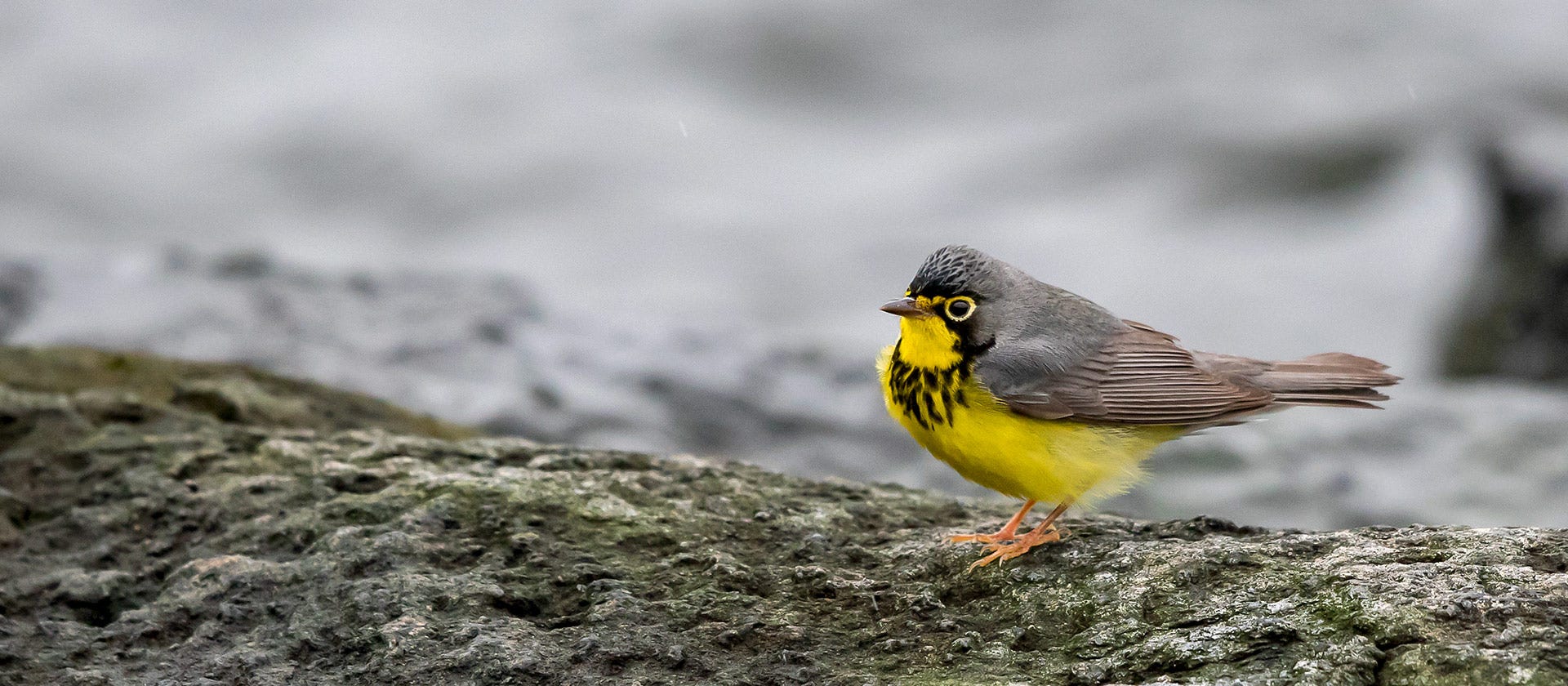
This gentle rain of birds, this disruption in migration known as a “fallout,” brings color and song from heaven to earth. Having watched wildlife for a half century, from the Arctic Circle to tropical forests, I can attest that songbird fallouts, although rare, are among nature’s most spectacular and honest expressions of life — and among its most imperiled.
One recent memorable fallout came on May 19, 2019, when thousands of migrating songbirds flew off course in dense fog off the coast of Maine. The Atlantic Ocean is no place for a songbird weighing an ounce or less; the ocean is for gulls and albatrosses and eiders. For a sparrow, robin or oriole at sea, in the event of a water landing, well, there is no water landing; there is only death.
So as the sun rose and pushed light into the fog, the exhausted songbirds, with virtually nowhere to go, made their way on tired wings to Monhegan Island, a rocky outpost 10 miles out in the Gulf of Maine. And to those of us on the island that morning, the skies delivered a most shocking fallout — manifest especially in charismatic songbirds known as warblers.
Keep reading with a 7-day free trial
Subscribe to Chasing Nature to keep reading this post and get 7 days of free access to the full post archives.