

Virtue in a Droplet
On a rare parasitic plant, my tiny discovery became a way of grace and triumph

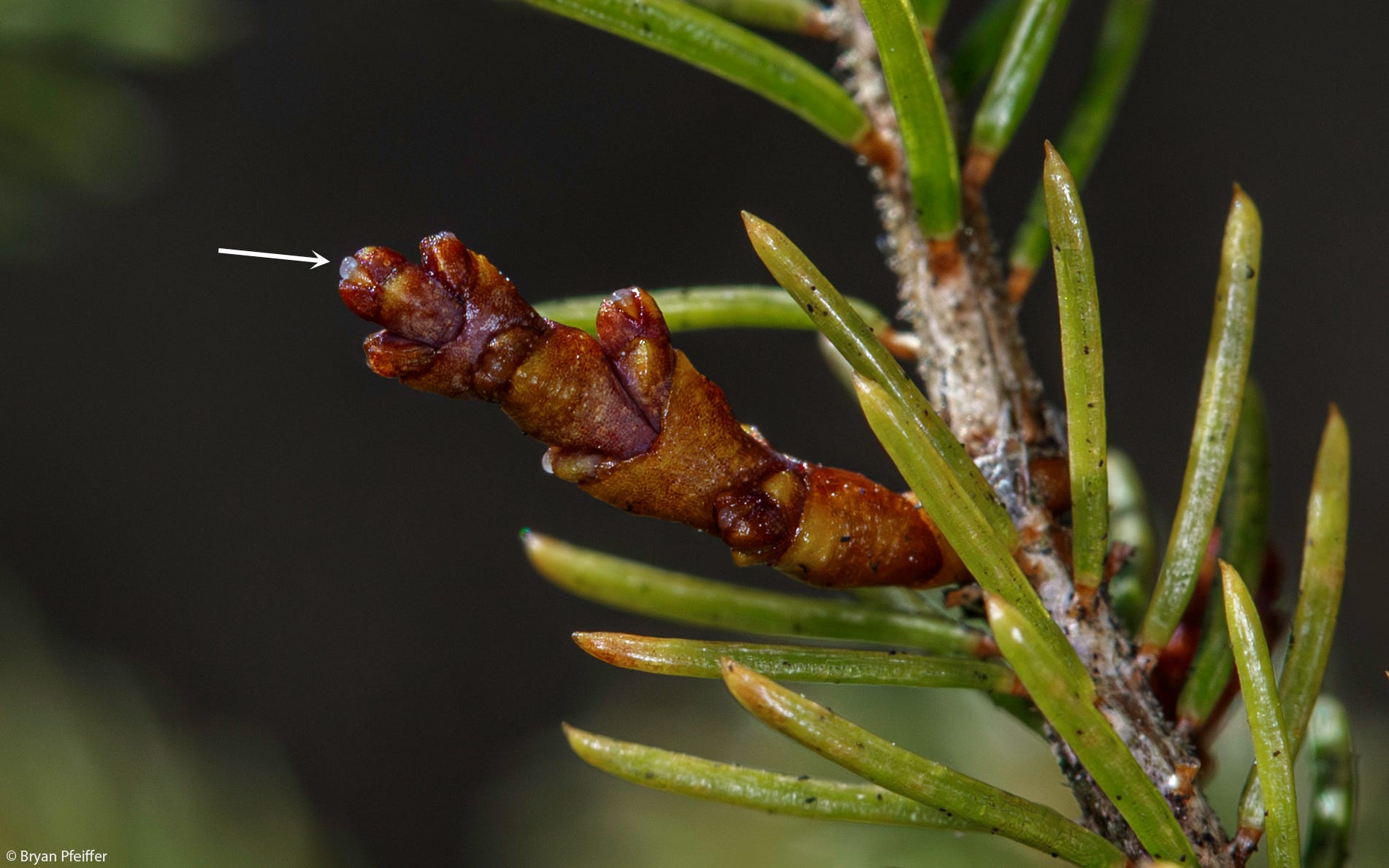
Given the world’s troubles, I recognize that a droplet at the tip of a bizarre flower isn’t exactly breaking news.
And yet you, dear readers, are among the few people ever to see this droplet, which is the sugary secretion of a parasitic plant called Eastern Dwarf Mistletoe. That’s because, as best I can determine, I’m the first person to photograph this phenomenon in the wild and publish its image.
But this isn’t about me, or even entirely about the droplet, which botanists unceremoniously call “stigmatic exudate.” This is instead about the satisfaction of finding something small, odd, or even common in nature. Mine is a droplet in a bog. Yours may be a triumph closer to home.
The Parasite
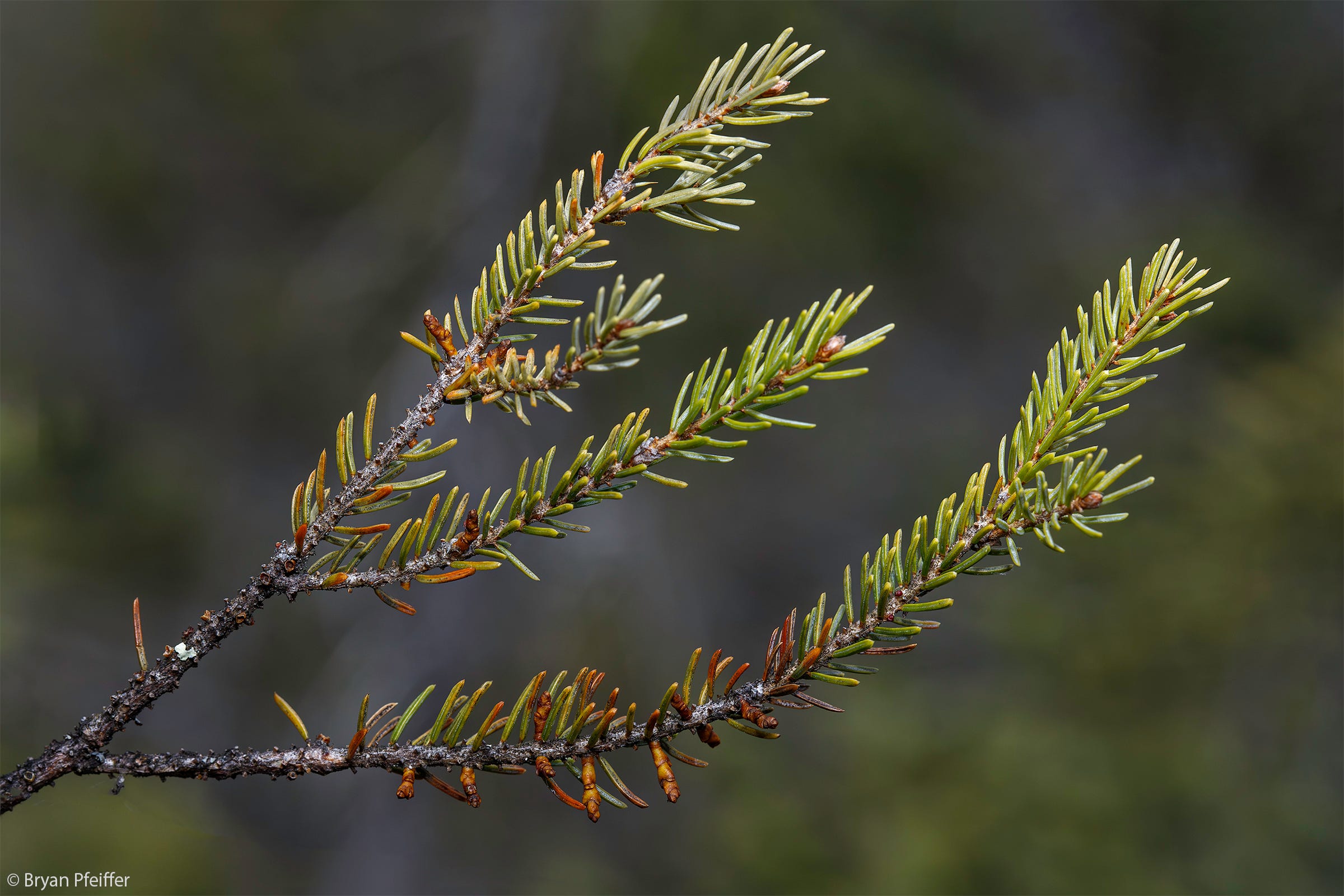
But let’s begin with the plant, which itself is rare enough. Eastern Dwarf Mistletoe (Arceuthobium pusillum) isn’t exactly the plant some of you might steal kisses beneath at Christmastime. It’s one of more than a thousand mistletoe species on Earth, all of which are parasites on other plants.
Rather than sending their roots into soil, mistletoes tap through bark into a tree or shrub’s plumbing to extract water and nutrients (it doesn’t always damage or kill the host). And like other plants, mistletoes produce flowers and fruits, which can be food for insects, birds, and other wildlife.
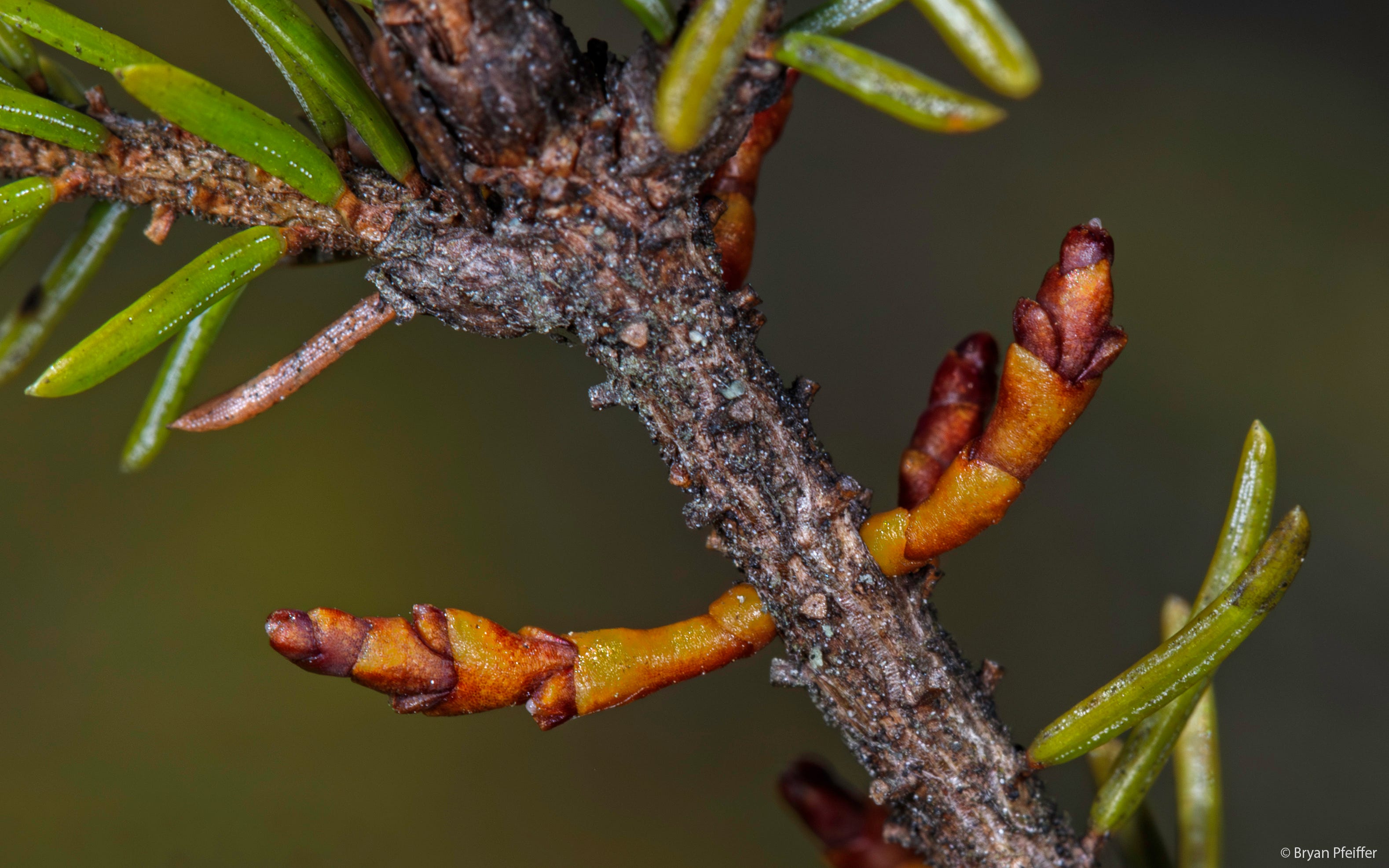
Eastern Dwarf Mistletoe grows on conifers — spruce, tamarack, fir, or pine — but mostly Black Spruce here in Vermont. Neither leafy nor showy, it presents instead as brown shoots, only a centimeter or so in length, along spruce twigs. Finding Eastern Dwarf Mistletoe amounts to searching the spruce needles for a fat brown version of one.
The “Wrong” Flowers
My journey to the droplet began April 4 at a woodland spruce bog that Josh Lincoln, my dear friend and most trusted field companion, knew to be busy with mistletoe. On that chilly day, the bog was calm, more a place of promise than of presence. A Common Raven croaked overhead. Ice floated in bog puddles. Josh and I got to work.
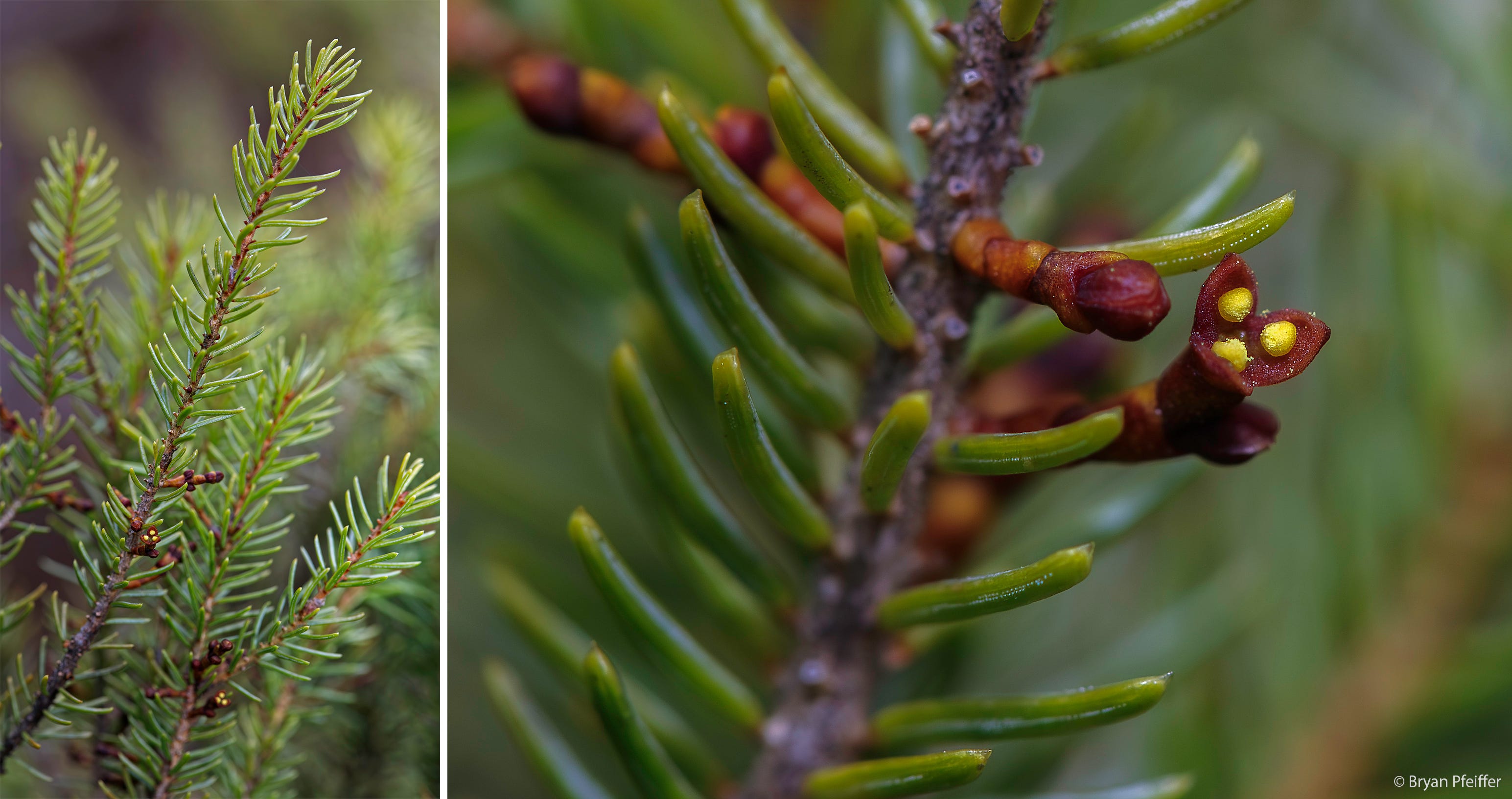
After scrutinizing hundreds of mistletoe shoots, and just as we were about to give up the search, I noticed some fetching yellow specks, bright as fresh highway paint, in a shrubby spruce. These were mistletoe flowers, and yet only half of our journey: they were males. Although Josh and I rejoiced among these odd blooms, our quest was not yet complete.
Dwarf mistletoes are dioecious, which means a given plant is either male or female. Those yellow specks were anthers bearing pollen, each resting on a brown petal like an oyster on its shell. Josh and I found no female plants in flower, and therefore no sugary droplets. We would need to return to the bog another day. (It’s not hard to get Josh and me to a bog any day.)
The Droplets
On April 25, three weeks after our initial visit, the bog was coming to life. The raven still croaked. Leatherleaf flowers, swelling in their buds, dangled like little white bells from their twigs. Two Blue-headed Vireos had arrived to sing their sweet repertoire: swee-up… cheerio … be-seein’-you … see-ya! And Eastern Dwarf Mistletoe males were now in full bloom — lots of them.
“I want droplets,” I said over and over to Josh, who puts up with me like nobody else. (Josh wanted droplets as well.)
The female flowers of various dwarf mistletoe species sometimes produce a tiny, glistening drop of liquid containing the sugars sucrose, fructose, or glucose. Probably a reward for an insect conveying pollen from male flowers, the droplet also seems to help pollen grains germinate and fertilize a female flower’s ovules. Although I had read literature about this, nowhere was I able to find photos or even illustrations of Eastern Dwarf Mistletoe’s droplets. (It’s hard enough to find images of the female flowers, which look nothing like any flower you’re familiar with.)
A bog is a big place with lots of wonderful distractions. Josh and I were basically searching for a translucent poppyseed on a weird plant. It amounted to leaning into what looked like female mistletoe shoots and scrutinizing their tips with a 7-power hand lens. I felt like Sherlock Holmes (without the brainpower). But one thing about us humans: we’re probably more dogged than dogs.
“I’ve got droplets!” I finally shouted across the bog toward Josh. Or, as an academic botanist might say, “I’ve ascertained stigmatic exudate!” As it turned out, so did Josh. And now you do as well.
I went to the bog, twice, not to seek orchids or warblers or butterflies, but to search for a droplet on a odd plant. It became for me a way of purpose and grace.
Purpose and grace may wait as well in the backyard, by the roadside, or in a crack in the pavement. It need not be rare or even beautiful — as long as it means something to you. So seek your orchid, your warbler, your butterfly.
Seek your droplet.
Bonus Botany
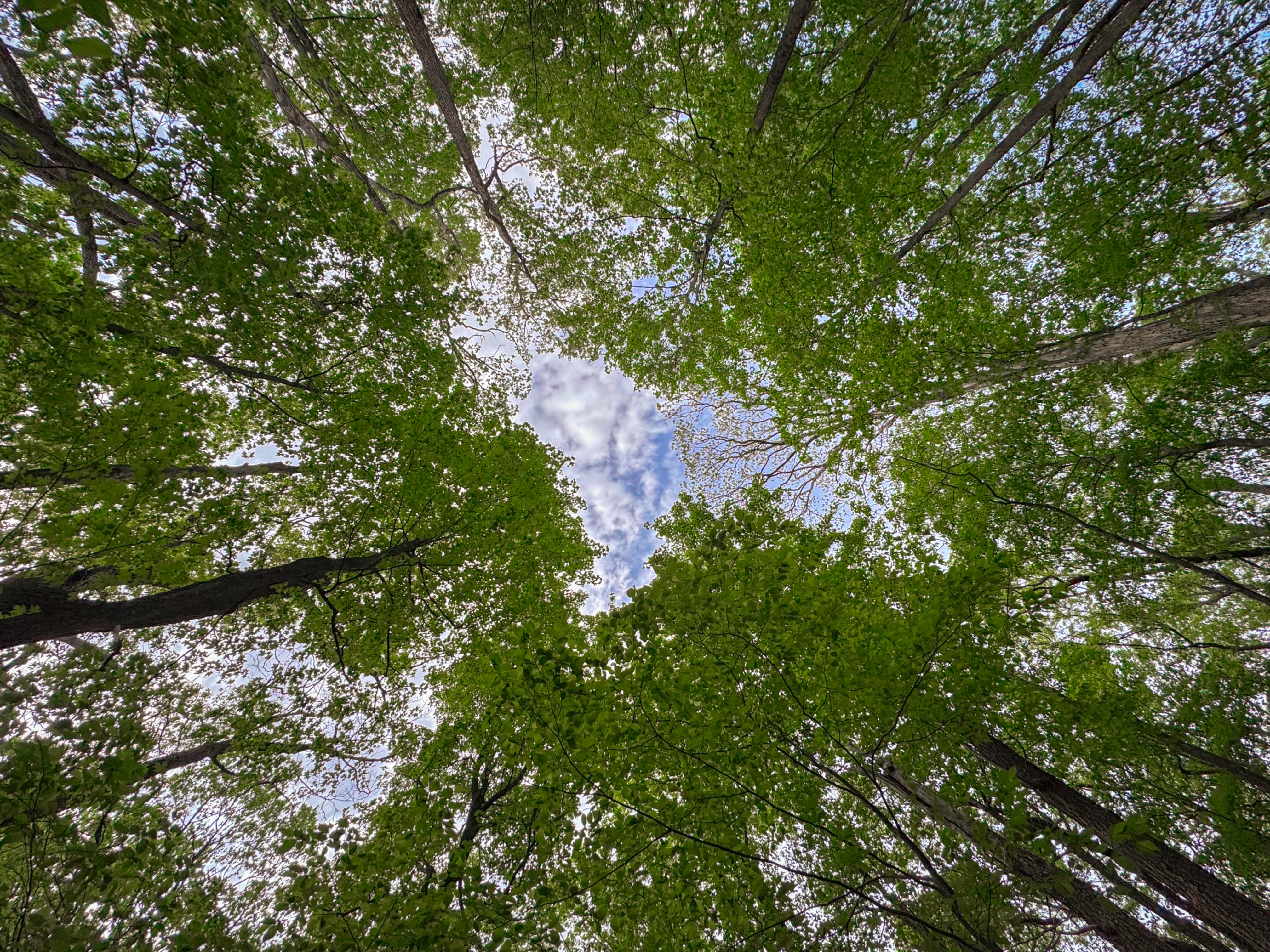
My more modest aspiration closer to home this spring was to see the flowers of American Beech (Fagus grandifolia). For virtually my entire life (so far), I’d walked among these common trees and never once seen their separate male and female blooms, perhaps because I’m usually looking at songbirds in May. But that’s no excuse. A better excuse would be that beech flowers tend to be high in the canopy. Nonetheless, after considerable and determined searching this month, at long last I found my low-hanging flowers (and soon-to-be fruit). Triumph in the prosaic. Along the way, I reclined in the woods to watch the clouds and the leaves. I do this a lot.
Eastern Dwarf Mistletoe causes its tree hosts to form growths we call “witches’ brooms” — something Henry David Thoreau described inn 1858 from Walden Pond, 13 years before the mistletoe itself was described to science.
Mistletoe fruits mature in capsules that explode in fall, shooting sticky seeds onto spruce boughs, where they later germinate and infect the trees twigs. The shoots we see are the tips of a kind of root system in the host plant.
Confirmation of my mistletoe droplets came from Dr. Daniel Nickrent, an expert on parasitic flowering plants at Cornell University. (Even he’s never seen the droplets.)
My motivation on mistletoe comes in part from the naturalist and botanist Steven Daniel, who for years has been observing the flowers of Eastern Dwarf Mistletoe, and ultimately joined the club and found droplets this spring. Read Steven’s wonderful article on page 14 of this issue of Mitchelliana, a publication of the New York Flora Association. It includes Steven’s images of the all-but-invisible female mistletoe flowers (along with droplets from a different mistletoe species).
Related Reading

References
Hawksworth, Frank G.; Wiens, Delbert. 1996. Dwarf mistletoes: Biology, pathology, and systematics. Agricultural Handbook 709. Washington, D.C.: U.S. Dept. of Agriculture, Forest Service. 410 p. https://research.fs.usda.gov/treesearch/4699
Daniel, Steven. 2024. The Strange and Fascinating Dwarf Mistletoe, Arceuthobium pusillum Peck. Mitchelliana. Vol. 35 (2), 14-16.
Speaking of droplets, this is my Golden Rule: Dew unto others as they would dew unto you.
All of this life—as huge as redwoods or blue whale or as impossibly small as your drop or even so small as to be invisible seen under a 7-power lens—ALL of it powered by the sun, ALL of it just friggin' amazing. Thank you for continuing to Chase Nature and bring us along for the hike.